


Amsterdam is at its best from the street. If canals create the city’s iconic silhouette, the streets serve as its heartbeat — where locals bike to work, cafés spill easily onto pavements, and neighborhoods gently transition from one mood to another. Walking in Amsterdam is not about getting places, nor about checking out sights: It’s about registering the beat. The city shifts on layers, and every street has some small human history to it. Together, these stories combine to create a more encompassing narrative of a place that knows how to manage the equation between energy and ease.
A day observing street life in Amsterdam is a journey through contrasts. A bustling thoroughfare of commerce full of energy and conversation dissolves into quiet residential streets where people go about their daily lives. Centuries of trade and culture have shaped historic routes that flow into modern neighborhoods determined by local life. The transition never feels abrupt. Instead, the city paces you gently with space, sound, and pace to indicate when it’s time to decelerate.

This rhythm is more noticeable as the day goes on. The crowds thin, the streets open up or soften, and my attention turns away from exploration and toward presence. The pressure to keep going in Amsterdam is nonexistent. It calls attention to them, slows them down, and ultimately settles on some of them. As night comes, the urge to walk begins to surrender to an impulse to sit still and simply be.
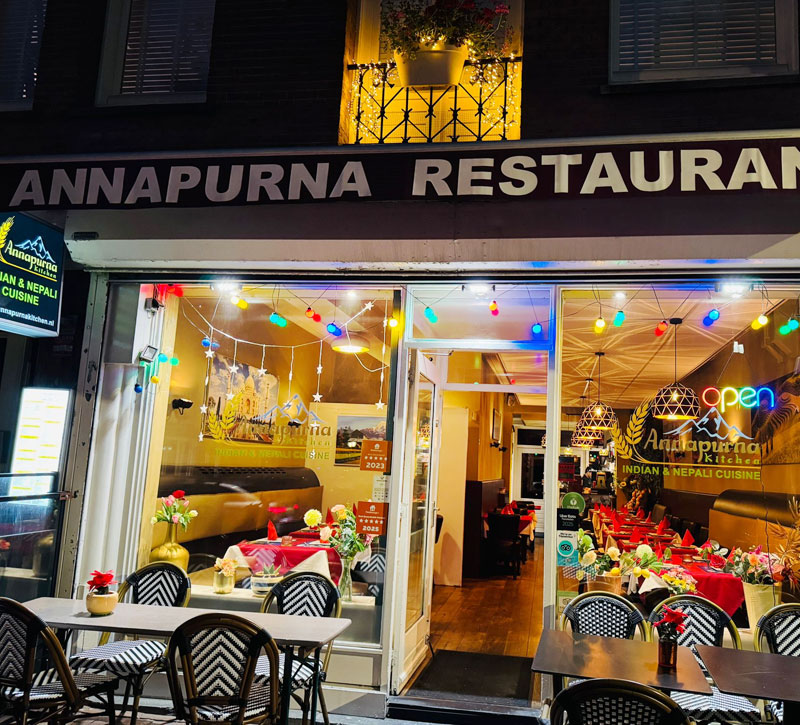
This trip goes along this natural road—from the historic city center through bustling shopping streets and real people neighborhoods to a very peaceful end at the Overtoom. A laid-back dinner at Annapurna Kitchen wraps up the day nicely in this vein. After hours of walking and looking, to sit down in a peaceful, inviting environment is to let the impressions of the city congeal into a day on the streets of Amsterdam that one will recall as a unifying experience
Amsterdam Seen From Its Streets
To know Amsterdam, you have to walk it. Streets here aren’t simply functional conduits from one spot to another; they’re social spaces, historical signposts, and connective tissue linking different lives. The city’s layout, meanwhile, subtly suggests exploration without the pressure of urgency. Around a corner, you might find that the ambience has changed — busier, quieter, greener, or more intimate — without warning or fanfare. These are transitions that aren’t created to dazzle, but inhabited.
Amsterdam’s streets reward attention. Details reveal themselves at walking pace: the rhythm of bikes streaming past, the way cafés spill seamlessly onto pavements, the subtle adjustments in architecture from one block to another. The streets don’t segregate experiences; they mix them. Boulevards yield to backstreets. Old façades make room for new housing. The city comes off as layered, not segmented, coherent rather than planned.
Street life here evolves by the hour. Mornings are utilitarian and packed, alienated by commutes and routines. Social afternoons, with discussion; terraces filling and a more leisurely pace. Evenings become contemplative, the bustle ebbing away , and the tone of the city warming up and turning inward. Walking is what allows you to record these changes, not skim right past them. Time is something you watch, not something you control.
It’s the organic nature of that change that is Amsterdam’s point of difference. The sharp distinction between busy and calm, central and local, doesn't exist. Instead, the city eases you outward slowly. Streets widen or contract; noise crescendos and dissipates; the environment tells your body when to charge ahead and when to stop. The sense of exploration here feels natural rather than directed.
This journey begins in the historic core, where Amsterdam’s streets originated around trade, water , and travel. There, it follows local roads that day laborers use every morning — streets molded less by tourism than routine. And farther out, the city gives up its everyday. Life seems less watched and more real.
To walk in Amsterdam like this is to turn the city from a series of sights into an unfolding experience. You’re not slammed relentlessly forward to get somewhere; you’re encouraged to stay in the now. In the process, they present Amsterdam not as a thing to be ticked off, but rather as a vast and slow-moving place to be comprehended incrementally.
The Historic Core: Streets That Shaped the City
FIRST OF THE DAY Rokin is one of Amsterdam’s oldest and most important streets. Rokin has been a corridor of movement for centuries, connecting trade, water, and people alongside the Amstel River. For centuries, people have moved through this slice of the city — merchants and residents and travelers — shaping the avenue’s personality along the way. It’s grounding, walking here in the morning. And there's continuity in architecture, the size of the street, and the steady motion. For all its history, Rokin does not feel like a relic out of time. Shops come and go, trams run through it, and the street is barely out of place in today’s city.
Close by, on St. Nicolaasstraat, is a quieter texture. Nestled near the historic center, it’s an older Amsterdam — small, labyrinthine, and undeniably human in scale. The buildings are closer, the perspectives shorter, and it slows down naturally. It’s a street to watch, not rush past. You notice the small things: worn doors, thin sightlines, and aging buildings quietly existing alongside everyday use.

The walk then continues to Prinsengracht (near Westerkerk), approaching Westerkerk as we truly see where the city intersects with water. A canal runs underneath, and while this trip is conducted on streets rather than in canals, the canal shapes everything. Light dapples, sounds dissolve in a softer framework, and movement now is less assertive. The vicinity of Westerkerk is reflective, providing a moment of calm and pause before the city continues to relax and grow busier.
The Huidenstraat, just off the main thoroughfares, provides a small but crucial counterpoint. The sound is close and subtle; it doesn’t demand attention. Instead, it bolsters one of the defining attributes of Amsterdam: so much charm lives between larger streets, not on them. Huidenstraat (near) has an intimate scale and sense of purpose, a nod to the fact that the identity of a city is crafted as much through small links as major arteries.
Collectively, these early streets form the basis of the walk. They show a city that is historic, human-scaled, and quietly confident: A place formed not by spectacle but over time with day-to-day use, movement, and continuation.
Energy and Expression: Amsterdam’s Lively Streets
It’s still the morning, and the city is waking up around Reguliersdwarsstraat as it approaches midday. An expressive street, expressing Amsterdam’s open and social character. Even during the day, it’s alive. Diners meet casually, laughter floats over the sidewalks, and movement is personal rather than rushed. The street is a place with an identity — confident, inclusive, and lively, and at a glance provides insights into the city’s anatomy beyond its landmarks.
From here, Leidsestraat pulls the traveler west. This popular shopping street bustles with storefronts and foot traffic, as well as the to-and-fro of neighborhoods. It serves as a bridge, bridging the historic core ahead with the cultural and entertainment district. It feels good to walk here, with purpose but not overbearing. The street never becomes chaotic, though, and the city seems full but manageable.
The energy ratchets up near the intersection of Leidschestraat / Leidseplein corner. This corner is a nexus of shopping, performance, and the routines of daily life. Street musicians convene, cafés fill up, and everything starts moving in all directions. The space is transitional — a place where the city transforms from daytime routine into anticipation.
The momentum of the story carries on, and down by the water on Stadhouderskade (near). Running alongside canals and major cultural sites, the street provides an often wide-open vista and a regular current of motion. Trams rattle by, cyclists follow a beat, and water adds to the sensation of space. This stretch is peak city energy — the time of day when Amsterdam feels most outward-facing and vital.
But even here, this city bristles against the imperative. Even when it’s alive with action, there’s a place to stop and step aside and watch. Benches, water’s edge, and open sightlines create places of rest within activity. This equilibrium — energy but not pressure — is what Amsterdam, in its relatively teeming state, dancing along strikes for the traveler, keeping travel fun instead of fatiguing.

Cultural and Residential Flow: Streets With Balance
A bit removed from the most bustling streets are Maasstraat (near) and Ceintuurbaan (near), where the city breathes a bit more. The change is slow but unmistakable. Foot traffic thins, the storefronts seem more familiar than performative, and the pace drops to something steadier. Conversations are local, routines feel established, and the city’s tone is less outward-facing. here amsterdam is no longer performing; it is not even acting itself.
These streets occupy an important intersection between cultural flow and household stability. They are still operating, but with even energy," he added, as opposed to focused. Sidewalks lure walking, free of navigation stress. Crossings are peaceful, the place inducing mindfulness, not vigilance. "The result is a comfortable feeling, one that comes naturally as an omen the day is past, it's most trying."
The shift is ported with greater emphasis on the neighborhood in Gerrit van der Veenstraat. It feels like an enclosed street, a working one, driven by daily rather than destination traffic. There’s a rhythm to the place that implies familiarity — people on the move, with purpose but not urgency, quiet interactions unfolding naturally , and a feeling that time is being used rather than spent. Strolling up and down this stretch is grounding: the city feels like it has settled into a rhythm of its own.

Towards the center, Amstelveenseweg opens the space up again, but not to recover from that intensity. Its open layout and clean sightlines direct the movement south, then west, in an unhurried registration. The street has a good flow to it as well, meaning the ride does not feel like it is being pulled in all directions. It’s something connective rather than commanding, in the service of motion rather than accelerating it.
Together, these streets are a fine expression of Amsterdam’s unpretentious harmony. They’re linked without being chaotic, active without being overwhelming. Spectacle can be had all around; livability is what you will find in the city, where there are no museums or great landmarks or leaps for humanity. But this is an area we tread on walking, it’s there to comfort rather than excite, to give us something sturdy underfoot after stimulation. Amsterdam’s power is found as equally in how it is lived in, as how it is visited — so such streets are not the time between highlights, but an essential part of the journey.
Amsterdam West: Everyday Life on the Streets
As the trip continues deeper into Amsterdam West, street life changes in a manner that feels both immediate and reassuring. Landmarks grow less dense and with them, some sense of thin performance, which afflicts even the area’s hubs. What takes its place is a quieter and lasting thing: everyday life moving at its own pace. This part of the city doesn’t make a big announcement. It just works — and that is exactly why it feels authentic.
The manifestation of this shift is most manifest in Jan Pieter Heijestraat. This is a busy but not very frenetic street. Shops open early, cafés pour drink for drink with regulars who don’t show high school IDs, and foot traffic falls into familiar patterns. Folks have places to go but no particular hurry to get there. Groceries are toted home, conversations exchanged on the wing, and bicycles halt for a moment before moving on. The rhythm here is dictated by the routine rather than the unusual. It feels lived-in, not curated.
Walking along Jan Pieter Heijestraat reveals a wider view of how Amsterdam operates when it isn't observed. The storefronts mirror the needs of the neighborhood — practical, varied, and unpretentious. There is a sort of unassuming confidence to this. Nothing is vying for attention here, but everything feels considered. This is a street built to help maintain everyday life, and in doing so, it shows a city that seems solidly grounded and trustworthy.
Kinkerstraat contributes another flavor to the mix, especially in the area around Kinkerstraat near No. 207 and at the intersection of Tichelstraat. Here, the city’s diversity is made manifest. Cultures clash not through spectacle but proximity. Storefronts change rhythmically, block by block; conversations flutter between languages without seeming to think twice; the air layers wafting food smells redolent of the neighborhood’s multicultural composition. Here is Amsterdam as a lived mosaic, rather than a planned one.
Kinkerstraat - Tichelstraat junction has a dynamism without being overwhelming. It sucks in motion; it doesn’t pump it. They scroll through, they meet up, and they pass along without disturbing anybody. The street’s charged, but it’s a social energy and not performance-based — more about cohabitation than crowds. It provides texture — visual, aural, cultural — without being overwhelming. You walk here, and the city is inclusive and adaptive, thanks to generations of sharing space and adjusting.

Just a short walk away, the mood softens again on De Clercqstraat around number 60. It’s a stretch that feels transitional in the best sense of the word. And it is not central and not suburban, not hurrying and not sleepy. Instead, it comfortably hovers in the middle. Movement has room to move, while there is also space for stillness. The traffic moves through; it doesn’t dominate. The city here seems in repose, like it has hit upon an equilibrium.
Drifting from De Clercqstraat (near 60) to Elandsgracht (near) and Elandstraat (near) offers a quieter counterpoint. These are not wide streets; they invite wandering, not direction. The pace slows naturally. I can almost touch the buildings; sound gets muted, and the rows of instruments feel upfront. This is when walking goes reflective. With no pressure to get anywhere, the mind starts to turn inward. Details come into focus: window plants, battered doorframes, recognizable signs.
Balance is what defines this part of Amsterdam West. The streets are alive but not overwhelming, diverse but not fragmentary, and connected without being exposed. There is no one center of attention. Instead, experience evolves as a continuous process of usage rather than of design. This is the city as it is for its inhabitants — pragmatic, resourceful, and quietly determined.
It’s in places like this that Amsterdam feels the most real. But not because it conceals itself from visitors — rather, it does not change for them. On who is (or isn’t) watching, life here goes on. That feeling of continuity is grounding. After wandering through hours of shifting energies — historic cores, cultural corridors — this neighborhood, in a way, offers an emotional resolution. The city doesn’t want to be explored anymore. It can share itself.
This feeling of being earthed is particularly potent at dusk. The physical body has been moved and agitated throughout the day with all types of stimulation; now it's fighting for ease. Streets like Jan Pieter Heijestraat and Kinkerstraat help make that transition more gradual. They lower the temperature, not life. The city is present, but not overbearing.

In this context, a visit to the nearby Annapurna Kitchen at day’s end feels in sympathy with the journey rather than disconnected from it. Having walked through streets influenced by the daily cadences and neighborhood rhythms, this encounter with a serene, unhurried meal is how it ends. They walk, then it stops. Conversation replaces navigation. The impressions of that day — canals, streets, transitions — coalesce into coherence.
This last stage is not in competition with what preceded it. It reflects it. Amsterdam West has already done the work of calming down a little, having people focus and re-center themselves. The evening simply follows through. Thus, the passage through Jan Pieter Heijestraat, Kinkerstraat (near 207), De Clercqstraat, and still quieter streets beyond is more than a mere itinerary. It turns into a view of how the city breathes — genuinely, continuously, under no fanfare.
Here, Amsterdam lays bare a truth that can be easy to miss when visiting only the highlights: The city’s greatest strength is not its landmarks but its neighborhoods. In ordinary streets that are made by routine, diversity, and sharing the space, Amsterdam is itself. Here, in the quotidian life of Amsterdam West, a long day of walking comes to its most natural and satisfying end.
Connecting Roads: How the City Moves
Amsterdam is frequently celebrated for its canals and squares, but a lot of its character comes from the roads that bind one area to another. These converging paths are not spectacular or life-changing. They instead work quietly and dependably, ensuring the city doesn’t have to move at the expense of its calm. Roads like Haarlemmerweg and Admiraal de Ruijterweg serve as steady arteries, with trams, cyclists, cars, and daily foot traffic moving along them in rhythmic harmony that seldom crosses paths.
What stands out on those roads is equilibrium. There is perpetual movement, but it is never assertive. Trams roll through with a predictable rhythm, cyclists have their own flow, and pedestrians cross without tension. The design values continuity over speed. These are working roads that support life rather than try to control it, and the vibe in Bucharest is an expression of that. Even at its busiest, the city feels managed rather than frantic.
Hoofdweg (near Tichelstraat) also feels equally comfortable, especially around Tichelstraat and Mercatorstraat (near). This is where Amsterdam shows us that flow can be handled with style. The roads are clearly functional, but they never seem unfriendly or intimidating. The trees, the broad pavements, and the regular dimensions soften things – so movement doesn't sluice all individuality away. Life, rather than being separated by the traffic, is carried on.
Further to the west, Sloterdijkstraat (near) picks up the baton. The tempo, on the other hand, is quite a bit slower here. The traffic lets up, the sounds get more spread out, and it’s less urgent. This strip is a passage — not only geographical, but also sentimental. You realize that the most intense part of the day is over and that it’s time to steady up and calm down.
These additional routes are vital for our itinerant tour through Amsterdam. They smoothly usher through movement, in turn allowing the mood of the city to shift gradually rather than jarringly. Instead of fracturing neighborhoods, they mend them. In the process, they serve to deepen one of Amsterdam’s defining strengths: its capacity to keep moving while maintaining a sense of equilibrium, coherence, and sensuous daily life.


Green Routes and Calm Transitions
Towards the evening, the walk gets noticeably softer in Heemstedestraat (near). Green spaces are now suddenly close by, and the change in tone is instant. Sounds are more spread out, movement is less compressed, and the visual field opens up a bit. The street now feels lighter and pensive, the city loosening its grip after rushing for a day. The traffic still flows, but it doesn't command. The scale is now beginning to tip toward peace.
De Heemstedestraat is more the soft side of that threshold. It's not like a Santa arrival -- it's creeping out. One comes here to walk, and the body inevitably decelerates. The gaze is turned inward, and that kind of desperation unfolding on earlier streets begins to fade. The city feels less purposeful; speed is not determined by need, but by languor.
Nearby, Vondelstraat reinforces this transition. Near Vondelpark, it has quite a gentle vibe. People stroll rather than hurry. Chatter is hushed, unforced, and often unfinished as walkers drift past each other. Action feels optional, not députoiry if you will. The park’s sway is subtle but potent, affecting behavior even outside its borders.
Here, Amsterdam appears to take a breath. The day’s rough edges dull. The light filters differently, greenery appears more pronounced, and the sense of containment that characterizes earlier streets opens up. There is no pressure to get anywhere. Walking is less a passage and more a presence.
This stage of the journey is like a kind of preparation. After hours of traipsing and looking and soaking up mood shifts, the body as well as the brain are eagerly anticipating repose. The city supports that instinct, and it provides space, quiet, continuity. Once the walk has taken us away from these streets, we have crossed over. My wanderlust has flattened to languor, and the night seems designed to unfold leisurely.
Overtoom and Overtoomplein: Where the Day Settles
That feeling of arrival is driven home when you hit Overtoom and Overtoomplein. Maybe this section is just a convenient stopping point after a day of hiking. Well-connected though relaxed, Overtoom spans the city’s buzzy areas and more subdued residential neighborhoods.
By evening, Overtoom twinkles gently. Trams glide steadily, lights bounce off windows, and the vibe induces slowness. Overtoomplein opens things up, providing room after the more crowded feeling streets earlier in the day.
Here, the city does not call upon you to wander. It invites you to stop.
Enjoy the Calm Evening Near Overtoom
When you’ve ninja-d your way through Amsterdam’s many streets (its Rokin (street) and Prinsengracht, Kinkerstraat and Vondelstraat), the simple act of sitting becomes kind of profound. This is the final stop, as it were.
Close to Overtoom 548, 1054 LM Amsterdam, the evening continues at a more leisurely speed. Dining here is restorative rather than invigorating. The mood is warm and cosy and conducive to leisurely talk. It’s perfect for reflection on the day and telling stories, eating, and feeling some food in your belly that grounds you after being on your feet all day.
This moment completes the experience. The streets have had their say; now it’s time to sleep in them.
Ending an Amsterdam Day the Right Way
Amsterdam street life is not a spectacle; it’s a flow. From the ancient thoroughfares around Rokin, formed over centuries of movement and trade, to Amsterdam West’s daily rhythms, the city whisks you softly from vigour to cool. Streets aren’t built to look spectacular in isolation; they coordinate, moving the day along with gentle nudges of pace, sound, and space.
And to wander these streets is to understand how considerate Amsterdam is in its design. Each road has a role. Well-trafficked hallways manage to keep movement from feeling frenetic. Residential streets slow the beat but leave it pulsing. Transitions are subtle, natural, and seamless, so body and mind adapt without effort. Neighborhoods add layers more than they interrupt, leading to a sense of continuity that allows long walks to feel like the naturally coursing rhythm of urban life already, instead of a struggle.
But as the day goes on, the city subtly directs you to cast your gaze elsewhere. Exploration gives way to presence. Observation turns into reflection. In the evening, that urge to be on the move transcends into something more like a desire to sit still and let the day sink in. And Amsterdam welcomes this instinct effortlessly, providing spaces that encourage rather than compel our acts of togetherness.
The day’s last stop at Overtoom is the real face of the city. It’s moderate, not extreme; attached but relaxed; even busy minus the frenzy. This is where this direction of the trip naturally comes to a close — not suddenly, but softly. Having a relaxed dinner is part of that flow, and Annapurna Kitchen makes it easy to fit it in. With hours of walking along shifting streets and neighborhoods, the slowdown starts to mean something.
Not that Amsterdam requires you to drink it up fast. It welcomes them to make their way through it mindfully, street by street, transition by transition. When the day wraps in comfort instead of being rushed, that’s the whole city. It is this balance — of motion and stillness, urgency and ease — that helps make Amsterdam a place so indelibly human, but also one not just to be remembered.