


Amsterdam is a city defined by water. Its canals aren’t just romantic backgrounds or pretty picture-postcard scenes; they are life trails that direct movement, form neighborhoods, and gently shape how each day goes. Ambling by canals makes it possible to see Amsterdam in layers — big and ceremonial one minute, small and deeply personal the next. Life here is measured by the water, reflected in it, framed by it, and public spaces that simply accumulate along its edges.
A canal-side visit to Amsterdam is never in a straight line. It drifts rather than directs. One minute, you are crossing a vast square filled with chatter and movement; the next, you’re navigating a quieter patch where local existence trumps big display. Cafés open and close, bicycles roll through with little urgency, and the city strikes its viewer not with moments of insight, but of transition. This mode of moving inspires attention without pushing and discovery without fatigue.
A day like that isn’t about leaping between landmarks or staying on the line. It’s all about letting the city dictate what comes next. You pause where the canals open up, linger where a bench catches the light; you move on when it feels right. Then bruited only about architecture, space, and light combine in entrancing ways to unite the individual sights into single experiences, with moments dividing streets, streets dividing squares, and squares defining the way you felt all day.
With the journey continuing slowly west, the mood lightens. The bustle of the historic center is replaced by quieter residential pockets, and the tug of evening is palpable. This is where the canal walk naturally ends — not with crowds or noise, but with comfort and quiet.
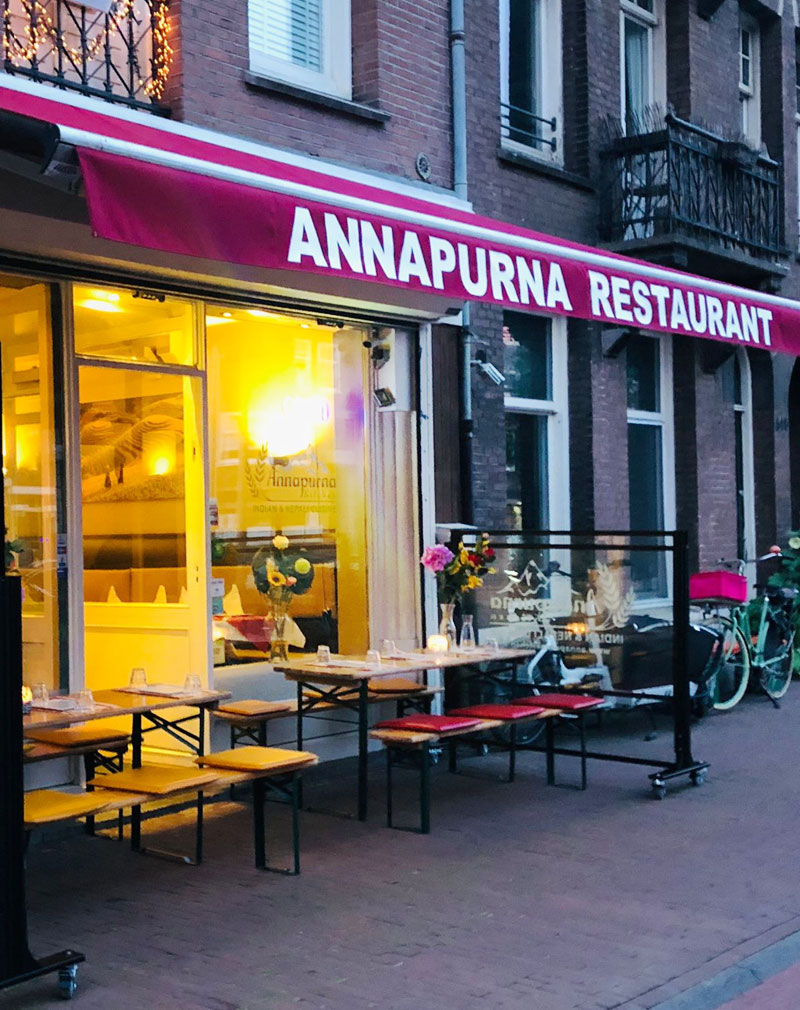
Finishing the day by Overtoom epitomizes this evolution. After all that time wandering, looking, thinking, and taking in the nuances of this colorful city, gathering for a leisurely evening meal at Annapurna Kitchen seems an intentional way to complete the day. It slows you down, your chatter subsides, and the day’s impressions come into focus. Here, the pace slows, and the trip that had been delivered along water feels whole at last.
Seeing Amsterdam from the Water
In Amsterdam, one learns by walking along its canals. The water changes behavior almost as though it were second nature. It alters the rhythm, softens the attention, and remakes how distance is viewed. Bridges invite lingering rather than passing by in haste. Reflective surfaces tug the eye down and out at once. The canals’ abiding presence establishes a rhythm that unobtrusively determines the day-to-day life of the city’s squares and streets, affecting how people flow, stop, and communicate with their surroundings.
Down the canals, Amsterdam unfolds itself slowly. The city does not urge forward; it offers drifting. Sounds carry differently over water, and motion feels less urgent. Walking, here, is no longer a means to get from place to place but instead a way of being within space. This is where you learn the city’s character most legibly —not in landmarks only but in transitions, pauses, and repetitions.
In Amsterdam, squares seldom stand alone. They are clustered around waterways, linked by narrow streets and hemmed in by canals that usher visitors gracefully from one pocket to the next. These squares serve as convenient breaks along a canal-side walk. People sit, gaze at boats drifting by, take in everyday activity, and regroup before pressing on. Each square provides a gentle tiptoe into another mood without interrupting the general flow of their days.
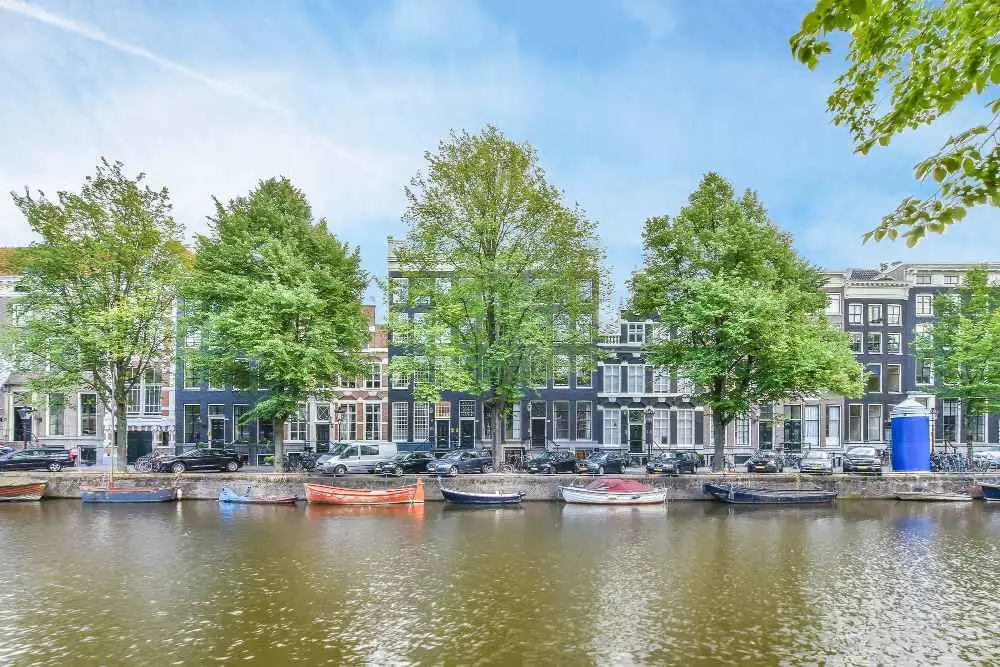
Some squares feel expansive and lively, charged with the movement of people past and layers of history. Others are introspective and reflective, sometimes featuring conversation, greenery, or residential life. The canals hold these contrasts together, so the transitions never seem jarring. Water dulls intensity, and then returns it barrier-free: the city glides between sedation and stimulation without a bump in the road.
A thread based around the canals makes for a day that feels like it fits together without feeling packed. Rather than leaping between isolated sights, the trip happens naturally. One square leads to another, not from intent but adjacency and meter. It’s an experience that is aggregate rather than accumulative, formed by continuity rather than accumulation.
This canal-driven motion simply tends towards rest, as the day wears on. Energy peaks, then gradually recedes. By evening, the city seems to have grown quieter, less because it has emptied than because it has filled out. The canals flow on just the same, securing the experiences of the day into something lasting. Amsterdam: A DayIn Amsterdam, a day is delivered not by force but by balance — always led by water and finishing where movement yields to ease.
Dam Square: Where the Canal-Side Story Begins
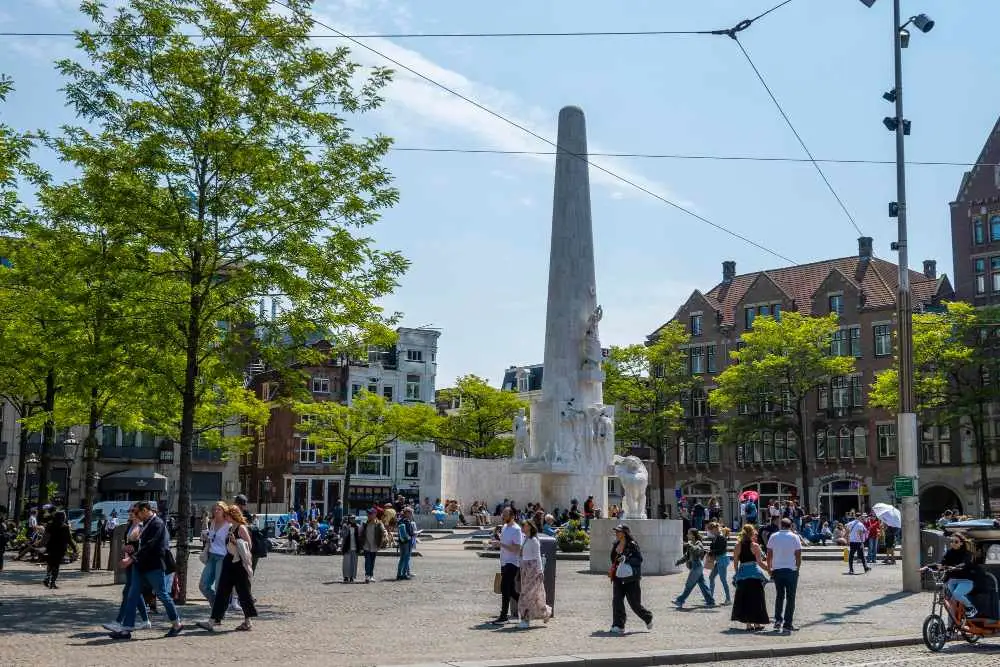
All canal-side voyages in Amsterdam seem to loop back to Dam Square. Although the square is not on the water, its proximity and history make it a fitting place to begin. It’s where the city first coalesced, Amstel (river near Rembrandtplein) long before the canals — with their concentric rings, graceful bridges, and gabled townhouses — spilled out to define Amsterdam’s layout and identity. In this respect, the Dam Square is also a structural and historical border.
Today, there is constant activity on Dam Square. Trams rumble by every few minutes; pedestrians traverse the paths that intersect here; conversations overleap one another in a mingling of languages. The square is open and spacious, with the unmistakable energy of a city center. We offer orientation and stimulation. From here, it’s easy to see how the city is laid out before you: streets fanning outward like spokes, many of them terminating at canals that silently sculpt what lies beyond.
Dam Square has an undeniable “I’m here” -ness about it. Visitors frequently come to a halt at this point, as if by instinct, drinking in the scale and direction of movement before deciding where to go next. This pause matters. It stands as a threshold between approaching the city and entering it. As a point of departure for exploration, the square is an entryway without instruction. It doesn’t ask for a road; it offers choices.
In a canal-side journey, Dam Square is particularly significant for the contrasts it provides. There is high energy but with a rooted, urban feel. Just a short walk away, though, and the vibe is different. Streets get slimmer; traffic thins out, and there are the first water views. The canals are starting to steer focus away from the masses and toward contemplation. This transition — from land-heavy locomotion to waterborne mobility — has everything to do with how Amsterdam feels.
You can already feel it waiting around the corner, right inside Dam Square. The square provides energy and context, but it is an announcement that this journey will not be a destination-only experience. It will be formed not by concepts but rather by mobility, rhythm, and gradual transformation. You don’t immediately know that these are canals; the water draws you in rather than commanding your attention.
From Dam Square, the forward route is less about where you are going than how you get there. The canals start to dictate the tipping of scales in favor of smaller squares, quieter streets , and reflective spaces. Thus, Dam Square is less a terminus than an opening act; it initiates the story that the water will go on to tell.
Spui and Weteringmarkt: Quiet Canal-Side Pauses
Once you have left the tourist hordes at Dam Square behind, the city starts to relax a little as it approaches Spui. The change is almost imperceptible, but it is irrefutable. The streets get narrow, the canals come closer, and bridges pop up more frequently, creating discreet interruptions to movement and moments to stop. The noise goes down, and the pace settles nearly without thought. It is here that Amsterdam starts looking in the other direction.
For centuries, Spui has been synonymous with thinking, talking, and literature, and you can still feel that character over there. The square is flanked by bookstores, cafés that are meant for lingering rather than quick stops, and university buildings close enough to keep the area intellectual. The square does not demand your attention — it rewards your patience. People are sprawled with books or coffee, conversation unfolds at a leisurely pace, and time here feels less regimented.
The canals of Spui only add to this self-reflective nature. Water mirrors trees, brick facades, and passing light to impel a feeling of enclosure without confinement. On the street side, the square feels sheltered as if lightly cradled by the city. It is not a place to traverse in haste, but one that invites you to be still. To sit here feels purposeful, even restorative, after the visibility and motion of the square a few blocks to the north.
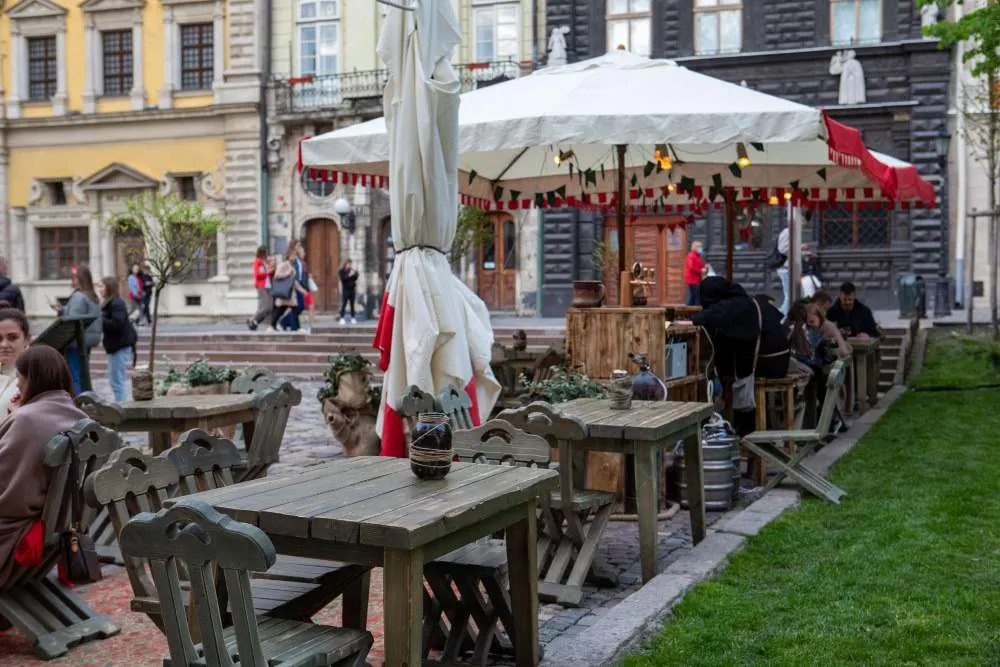
Just a short walk away, Weteringmarkt offers an even quieter pause. It sits tucked away near residential canals and feels intentionally understated. There are no visual declarations, no visuals battling it out for attention. Instead, the square seems to have been absorbed into daily life. Bikes lean on railings, locals make their way across a routine cut-through, and chitchat ripples away gently, more whispered than stopped for.
Weteringmarkt is characterized by non-performance. There is nothing here that feels curated for visitors, and this is its particular charm. The square is here for the people who live around it, and in serving them, it shows me a part of Amsterdam that isn’t so big-action. It’s a way of looking at the city, rather than consuming it.
Together, Spui and Weteringmarkt are the first real departure of the canal-side experience — from the jubilation of the city’s core to the introspective calm that being on water allows. They serve as a reminder to visitors that the beauty of Amsterdam is often found not in grandeur but rather in subtlety, temperance, and quiet continuity.
Rembrandtplein: Canals and Evening Energy
The canals widen again around Rembrandtplein as we walk on, and we are back in the city’s energy — but now it’s social: pedestrians, street performers, and the sound of English (mostly) being spoken. Water is more in evidence here, yielding wider reflections that capture the late-afternoon and early-evening light as it shifts. The square feels linked, turned out and wakeful, formed as much by motion as by assembly.
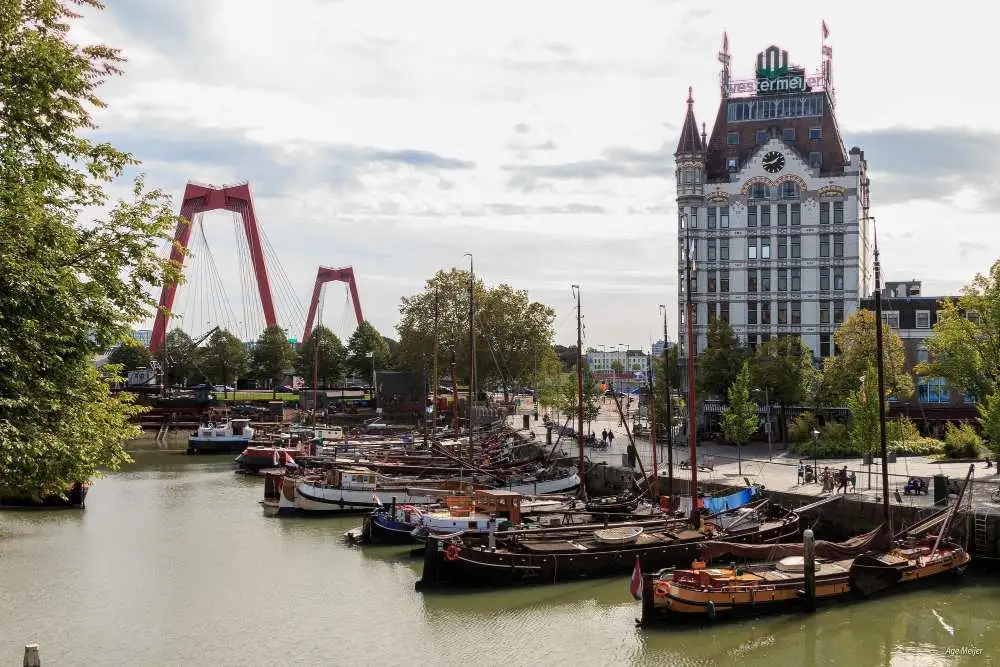
By the afternoon, Rembrandtplein is up and alive. There are casual meet-ups, terraces starting to fill, and an air of light anticipation. And as the evening progresses, it's even better. The talking worsens, and the music spreads to the square while they argue. The canals around them make the change uproarious, reflecting lights and movement and color, making the water itself part of the spectacle.
Rembrandtplein is a reminder that not all canals hush a city; they also can frame energy both in terms of sound and motion. Here, water isn’t what blunts the rhythm; it’s what makes it keen. Boats glide by, reflections flutter, and the square pulses with life. It is an immersive and visually compelling experience, providing a glimpse of Amsterdam at its most expressive.
But this intensity also marks its own limit. Rembrandtplein is awesome, but it’s not where the day lollipops. Spent some time here, and many visitors start to crave contrast. The canals create that release, giving the walk reason to turn away from stimulation and proceed onto quieter streets, where the evening can at last rest.
Leidseplein: Culture Along the Water
Continuing along the canals to the west, we end up at Leidseplein, another movement-centric square molded by creativity and performance. Narrow canals and closely packed bridges link the square to theaters, music venues, and cultural institutions, infusing the area with an unmistakable pulse of modern artistry. Water is used here as a channel of opportunity, bringing an energy flow from space to space and reinforcing the impression that creativity never stops moving.
Leidseplein feels anticipatory by nature. Big meeting places often have an atmosphere, and this place has a waiting-for-night-to-begin feel to it, even in the middle of the day. The street artists converge, the café terraces fill slowly, and conversations spill over in a babble of different tongues. The surrounding canals — their surfaces catching reflections of buildings, passing lights — suggest the liveliness that will soon be ramped up.
The square is turning into a threshold, as the day slides towards evening. It is the moment when exploration becomes possibility, and seeing gives way to living. With the other venues nearby, the area has an electric atmosphere where art, music, and socialising meet. Everything feels outward-facing and expressive, as if molded by what’s about to happen rather than what has already taken place.
But, as with Rembrandtplein, this energy has its own message. After spending some time here, things start to feel like the senses are saturated. The longing changes — from stimulation to tranquillity. Amsterdam anticipates this instinct seamlessly. Even slightly beyond Leidseplein, the canals narrow and life slows down. It’s the water that comes first, showing the way out to stillness and balance, to a gentler close to the day.
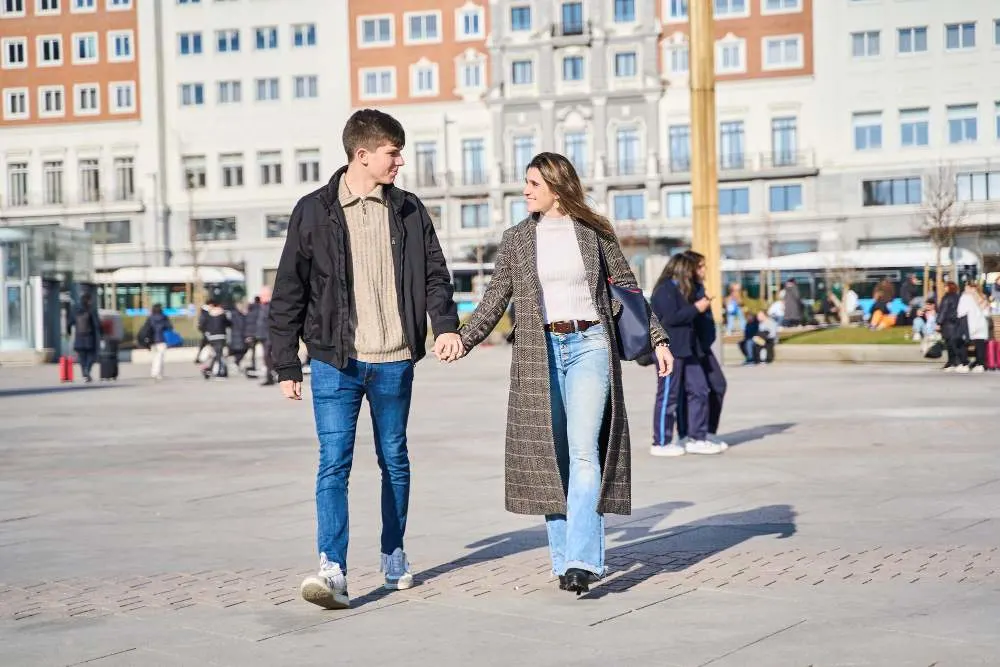
Frederik Hendrikplantsoen and Bos en Lommerweg: Canal-Side Calm in the West
To the west, the canals are more residential, and you definitely feel the city’s tone change once you pass Frederik Hendrikplantsoen. The waterways here are quieter and narrower, far less performative, lined more by trees than landmarks. This area is a breath of fresh air after getting stirred up from the central squares. The din lets up, the passage slows, and the city seems less watched over and more occupied.
At Frederik Hendrikplantsoen, Amsterdam’s feet are planted on the ground, feeling very much like a city of actual people. Families come together informally there, neighborhood residents pass through on their accustomed paths, and children play with no fanfare. Instead of lights, the canals shimmer with greenery; instead of signage, they mirror the sky. This is not a space meant to impress. The space is there to be used, shared, and returned to. It is a reminder that so much of Amsterdam’s identity resides not in what is displayed, but what is preserved day in and day out.
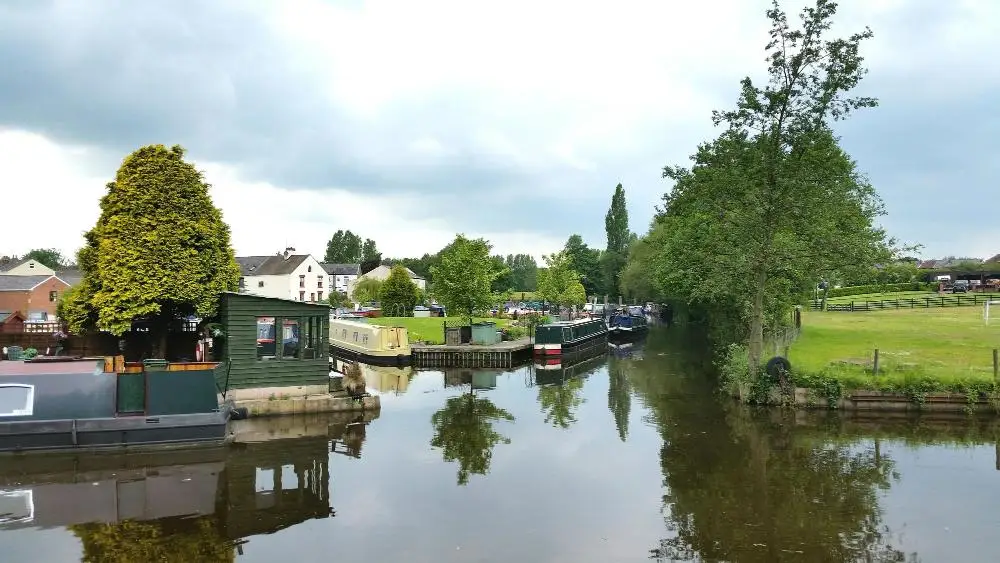
Close by, the Bos en Lommerweg maintains that calmer rhythm. It’s not exactly a square in the classic sense, but it is crucial to your travels. With its proximity to residential canals and ordinary streets, the space has a realistic, uncurated quality. Shops are for locals, routines play out without haste, and chatter occurs in passing rather than seeking an audience. Walking here is unforced, not in the sense of being directionless — there’s no feeling that you should be getting to someplace.
The walk at this point gives the day room to organically change pace. The canals no longer lead visitors into the thrall of excitement and spectacle, but toward ease and comfort. The city ceases demanding attention and begins giving comfort. You realize the worst is over.
In this more tranquil milieu, there’s no closure to the day, but visiting Annapurna Kitchen nearby feels more organic than premeditated. After hours of wandering and watching, of absorbing changing energies, sitting down to a calm grounding meal is the perfect shift. The canals are doing their job — ushering the day out of intensity into repose. Here, the real Amsterdam shows itself: not just a city to visit but a home that people really inhabit.
Mercatorplein and Surinameplein: Community Along the Water
Along the canal route, we head on to Mercatorplein, a square that is all about architectural identity and sense of place. And though it’s just off the main tourist thoroughfare, I’m a bit out of step with it, like we were meant to be anyway.
Mercatorplein fits snugly into its environment, moulded by the canals and streets that converge on it. The square looks communal — used, lived in, valued by those who travel through it every day. The canals here are more like connectors than attractions, joining neighborhoods and cultures.
Surinameplein is on the edge of this area, a locale defined by movement and diversity. If it is less insistent than the title suggests, then we’re not looking for people who live directly on canals; we’re searching for the current that they direct — the wash of life itself, of people passing through and between neighborhoods, becoming other.
Taken together, Mercatorplein and Surinameplein represent a different kind of Amsterdam. This is a city where canals unite not only sights, but neighborhoods. The experience of getting here is less sightseeing than belonging.
Stadionplein: Space, Openness, and Perspective
Stadionplein is the last square of this canal-connected route. After traveling so many hours through narrow canal corridors and tight neighborhoods, its openness is immediately expansive. Streets broaden, buildings retreat, and long visual thrusts replace cramped turns. The impact is physical as well as emotional — a feeling of letting go that comes without effort.
Stadionplein does this in a way that few spaces have. It’s unobtrusive, it doesn’t scream for attention,and there’s no focal point to dissect. Instead, it creates room. The body unwinds with the ease of movement, and then so does the mind. The walk here seems more laggardly, less purposive, as though the day is stretching out ahead to soften us. The nearby canals widen, too, only strengthening the sense that density has dissipated and pressure has lifted.
This vulnerability permits the day to resolve itself organically. Moments from earlier — packed squares, reflective canals, effusive surges of energy — coalesce instead of competing. Stadionplein serves as a buffer between activity and inertia, its form hinting at the in-between without declaring it. He starts to notice that the bulk of the walk is behind them.
Emotionally, this square is a game-changer. Curiosity gives way to contentment. Exploration shifts toward comfort. From here, the city no longer presents itself as something to pass through but rather to reside in peacefully. The slow pace isn’t because there’s nothing more to see but because seeing has subsided into contemplation.
By the time you arrive at Stadionplein, it’s done structurally, if not yet thematically. The square is designed to prepare visitors for the final movement of the day, in which rest, warmth, and nighttime entertainment come to the forefront. It follows naturally, feels symmetrical, and is deeply aligned with Amsterdam’s natural rhythm.
From Canals to Table: The Role of Overtoom
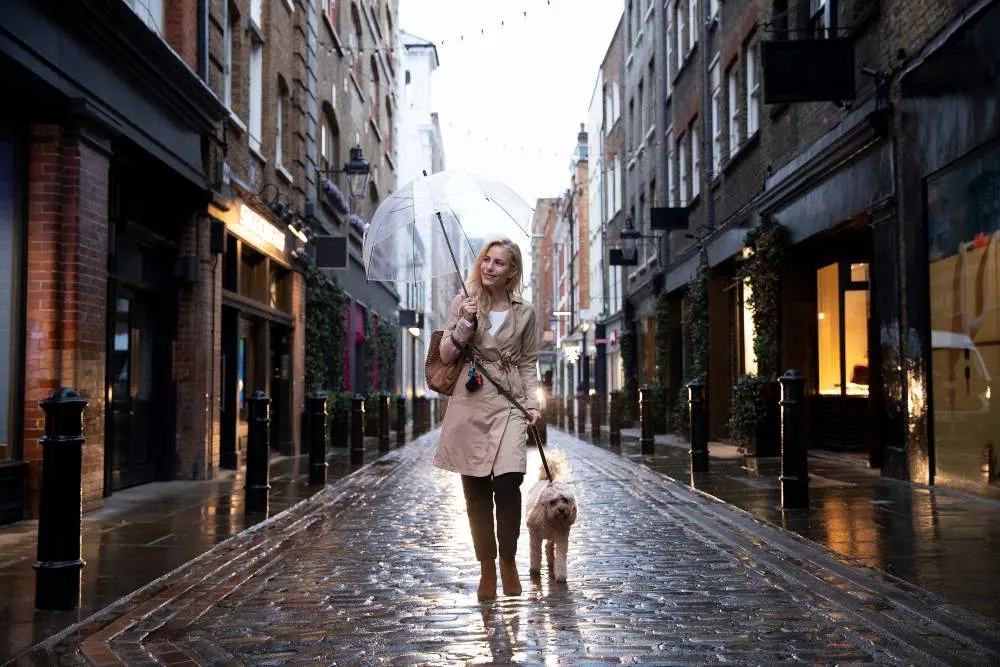
In the evening, the canals gently lead the stroll to Overtoom. After hours of shadowing water along squares, bridges, and watery neighborhoods, this street feels like a natural end — not a detour. It’s a connector, rather — connecting bits of the city — and feels noticeably less frenetic than the bustle at its center. The change is delicate, although it settles in throughout the body and pace of movement right away.
Overtoom is open and reassuring at night. Trams glide past with a certain healthy regularity, shopfronts emit a soft glow, and the pulse of the street demands you take things at something less than a sprint. Life is still here, but it's more evenly distributed and less theatrical. People come to rather than pass through. Conversations replace footfalls as the prevailing sound , and the city’s earlier ferocity gives way to a more welcoming thrum.
It's relaxed, canal-side eating comes as second nature after a long day of walking alongside the water. The instinct to move through and look at and take in is replaced by a need to stop and stay. Overtoom propels that transition, without isolating it. It still feels attached and friendly, but it doesn’t demand to be noticed.
Here, the switch from water to table is smooth. The canals, which formed the backdrop and rhythm of today, slowly slip out of focus and close in to the gentle hum that is this city. The dispersion of motion is replaced with stillness, not sharply but smoothly. This is one of the reasons Overtoom works well as a final stop—it eases you into the evening, syncing your body clock with a more rested mind.
That’s part of the reason dinner feels less like an activity and more like a furthering of the trip, communicated more quietly. The city doesn’t vanish; it goes limp. Overtoom sets the stage for that transition, making certain that the end of the day settles where it belongs—on solid ground.
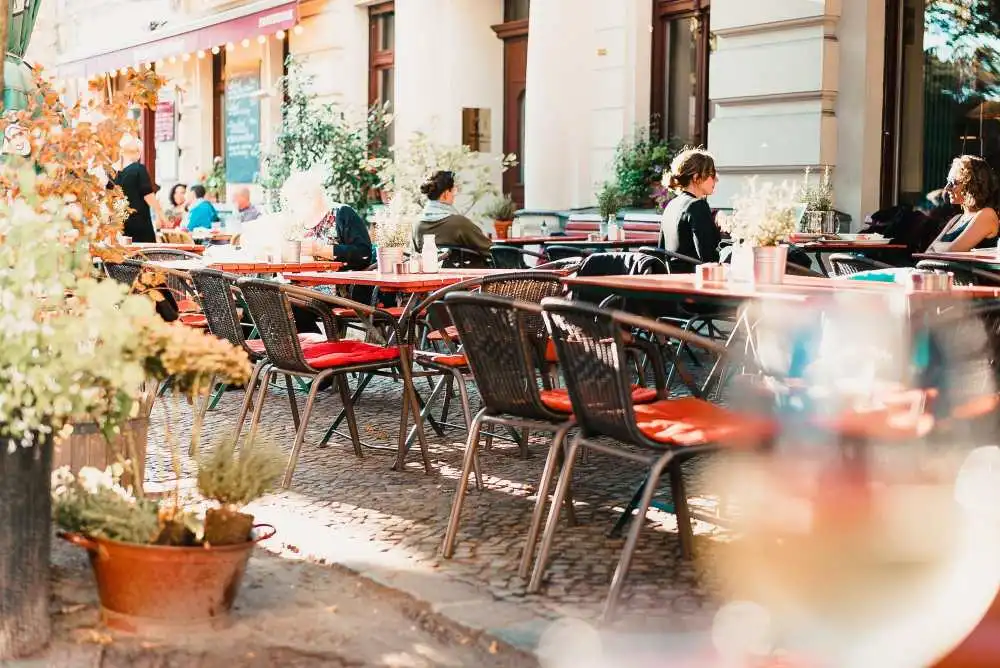
A Relaxed Dinner Finish Near Overtoom
After a few hours pursuing canals, then settling on squares, the body longs for ease rather than effort. Only a lazy dinner near Overtoom 548, 1054 LM Amsterdam does that just make you feel liberated. The transformation from motion to stillness feels intentional, a reflection of the end of a day in which one strolled and looked at things and made slow movements.
This is dining at ease. The spirit is warmth more than spectacle, conversation more than noise, presence more than pace. No place to go, no one to rush us. Instead — and appropriately enough, given the setting — you’re inclined to sit back, breathe (with/through your mask) and let the particulate matter of everyone’s dust-colored day pool at your shoes before placing an order.
But after hoofing it westward from Dam Square through Spui, Rembrandtplein, and Leidseplein to quieter squares farther west, a good meal in this area feels more likean accomplishment than an afterthought. It’s been a canaled journey of contrast, and one design has begun to slowly arrest. Dinner is all that’s tethering you to the Earth.
This is not the kind of dinner that competes with those that came before it — it does justice to them all. It makes sense of the day and turns a series of walks, halts, and views into an organized memory that will last a lifetime.
Ending an Amsterdam Day by the Water
The canals of Amsterdam are more than a backdrop. They are what make the city, how days proceed, and evenings ease to a close. A canal-side progress uncovers Amsterdam in reverse: from energy to quiet, from spectacle to plainness. The water measures, it promotes stopping, reflecting, and a pace that seems human rather than urgent.
From the gravitational force of Dam Square, to Spui and Weteringmarkt, where you can reflect on life or death, Rembrandtplein and Leidseplein, where the dance of light germinates from their waters as well as Mercatorplein and Frederik Hendrikplantsoen with an ever-thriving sense of neighborhood that gives more depth to the journey. Together, they assemble a day that feels layered and full, organized not by checklists but by atmosphere.
Closing shop somewhere near Overtoom is no afterthought; it’s just where the story ends. It is a mirror of what Amsterdam considers balanced, of not hurrying once movement has taken care of business. Resting at a leisurely evening in Annapurna Kitchen is where the day finally sinks. The walking stops, the tempo slows, and the city’s impressions come into harmony.
For me, this is the best way to experience Amsterdam, by water and from its public spaces, and then with a leisurely meal at the table.