


Amsterdam will reward you best if you take to the streets on foot. Though its museums and monuments are renowned for their role in shaping the trajectory of history, they simply cannot evoke the essence of the city as much as we know that here: narrow streets dimmed by centuries of footfalls, luminous canals, and districts changing temperaments from day to night. It is not just history of a plaques-and-guidebooks sort but history that is embedded in the fabric of daily life, murmured through brick façades, church towers and sleepy cloisters veiled by the bustle of nearby streets.

After all, a late afternoon meander through some of Amsterdam's older neighbourhoods is the perfect prelude to an evening of pause for thought, conversation and sustenance. As the light softens and the city’s pace eases, the experience becomes less about ticking boxes of sights to see and more about soaking up an atmosphere. This is when Amsterdam seems most intimate — when locals come out for evening strolls, cafés glow from within, and the streets plead with you to stay just a little longer.
The trip meanders through some of Amsterdam’s most personality-rich neighbourhoods: the canals around Westerkerk, the perpetually classic Jordaan, the hushed oasis of Begijnenhof and the vibrant streets surrounding De Pijp. And together, they make a path that tells the story of the city’s past and present, finally leading to an easygoing evening retreat by Overtoom — where the day often winds down at Annapurna Kitchen, and walking history and thought flow gently to a quiet close.
Westerkerk and the Canals: Where Amsterdam’s Story Begins
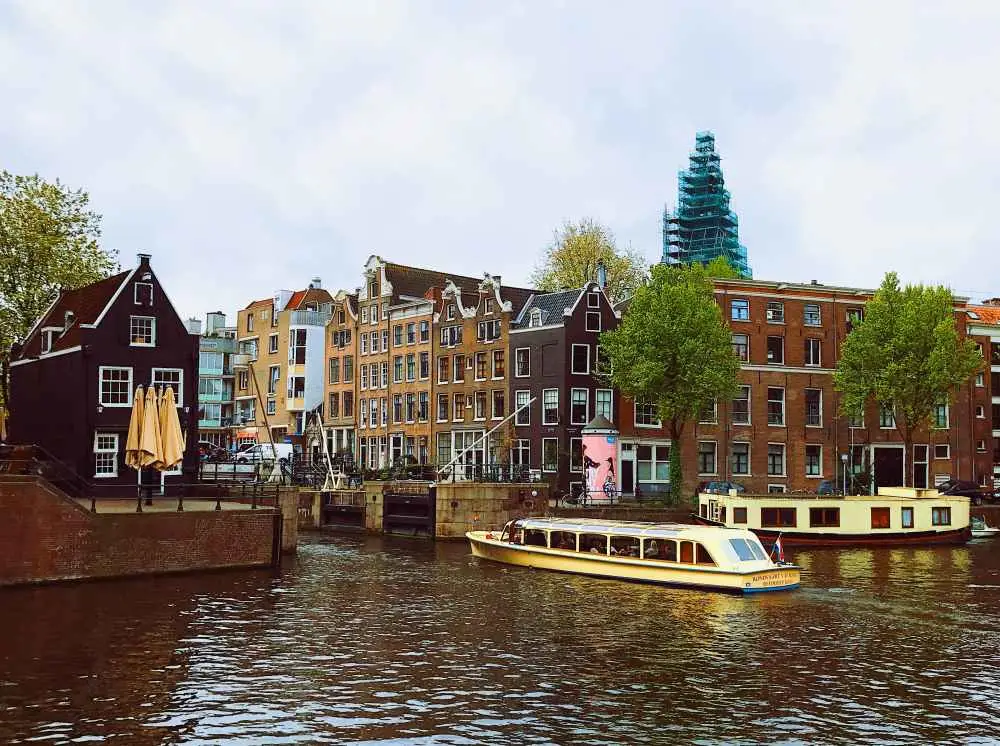
The tallest feature of the skyline along Westerkerk, the church has been dominating Amsterdam since the 17th century. Above the échelon of canal houses, its slender tower punctuates Prinsengracht, glimpsed from various angles and serving as both landmark and emblem of the city’s Golden Age. More than just the architecturally light-flooded belle of the ball, Westerkerk is a silent spectator to all centuries have let live and fade away along their grachten — trade, religion, celebration, and routine co-inscribed by time.
Prinsengracht towards Westerkerk is atmospheric rather than spectacular. In the afternoon, the canal is a mirror, reflecting rows of narrow houses that lean gently toward each other. Their windows capture the sun at varying angles, casting constantly changing patterns of light on brick and water. Boats pass by in a slow procession, leaving gentle ripples on their wake, and footsteps are heard echoing vaguely along the embankment. The environment encourages a leisurely pace, prompting visitors to observe small curiosities — doorways polished smooth by years of use, bicycles dangling from railing and gentle stirrings in canal-side apartments.
The area is anchored by Westerkerk, which gives it a sense of harmony and tranquillity. It is of a size that secures the neighbourhood without feeling overpowering. When the church bells ring, they mix almost organically with the city's soundscape: They are a punctuation to time but don’t disrupt it. The effect is more earthy than ceremonial. Adjacent streets splintering into little bridges, leafy corners and narrow passages where the pace slackens even more. These places seem worlds away from the busiest squares — moments of hush in the city.
Into late afternoon and early evening, things take a nudge toward sombre. Light gets warmer and softer, reflections grow deeper on the water, and foot traffic recedes. The canals are quieter, more contemplative. It’s a moment that commonly marks a change — from seeing to walking, from intense looking to easy taking in. Many visitors start falling away from the canal edge around here and are lured into nearby neighbourhoods, where history and everyday life blend easily.
In that way, the vicinity of Westerkerk and Prinsengracht is something more than a starting point. It is a tone that conditions how you understand the most authentic Amsterdam: layered, reflective and best navigated slowly, step by step.
Jordaan: The Soul of Old Amsterdam
A few steps away from Westerkerk (Prinsengracht 281) is the entrance to Jordaan, one of the city’s most beloved historic neighbourhoods. An Eyesore Turned Situated at the edge of pre-19th century Amsterdam, Jordaan was a working-class district–known for being fiercely independent, resilient and highly communal. That character is still visible today, not as a curated image of the past but as something we are actively living. History here feels present and useful, interwoven with everyday life rather than presented as a museum piece.
There’s a softer logic at work in the streets of Jordaan than in the city’s stodgier corners. They pinch and bend, directing slower locomotion and attending strolling. Not the long, straight vistas but corners, crossings and small surprises along the way would bring out something of what’s nearby in this community: a neighbourhood of divergent interests. Behind unassuming doors, centuries-old hofjes pop up almost out of nowhere. These enclosed patios provide peaceful views of bygone ways of life, and many are still used as living quarters today. They cater to curiosity and provide pockets of stillness in a world space otherwise occupied.
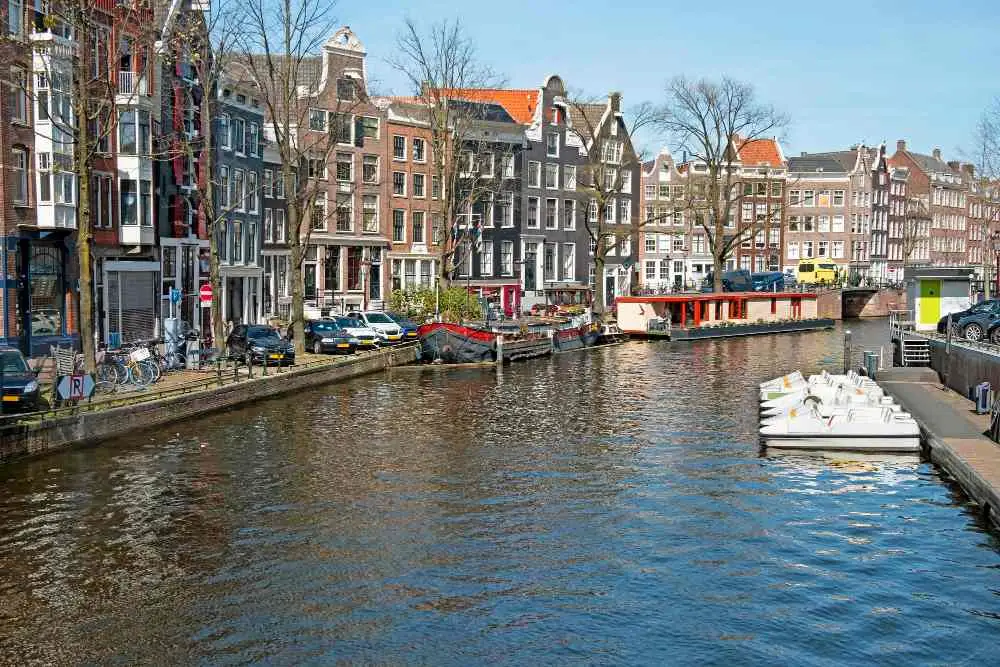
When evening falls, Jordaan blooms quietly and self-assuredly. There is momentum, but not a lot of heat. Locals walk outside for short strolls, cyclists glide by, and neighbours have quick-tour conversations that feel familiar and unforced. Independent boutiques and small galleries stay open just long enough to tempt a stroll, cafés and bars start to glow from within. The ambience is social, but subdued — welcoming without being raucous.
Jordaan (centroid) isn’t characterized by a particular landmark or street but rather the feel of the area as a whole. It embodies Amsterdam’s history on a personal level, through habits, relationships and traditions as opposed to monuments. Walking here encourages reflection. The rhythm slows down organically, and details emerge: steps of worn stone, hand-painted signs, flowers in window boxes. The city’s history nestles comfortably next to its present.
The night grows darker, slightly, and there is a nice feeling of more-ness. Jordaan doesn’t read as an end, but a chapter that effortlessly propels you forward. Its tranquil energy ministers to a busy mind, and will open you up for more peaceful thoughts in the future by providing contrast. It feels natural and effortless to continue your exploration onwards, out of the Jordaan, as though the neighbourhood is nudging you towards wherever the next stretch of your evening might lead.
Begijnenhof and Begijnensteeg: A Hidden World of Silence
Past the hustle and bustle of some of Amsterdam’s busiest streets is Begijnenhof, a tranquil haven that’s both steeped in history and within touching distance of the past. When you get to it via, say, Begijnensteeg, the change seems sudden and undeniable. In seven quick strides, the sound of traffic, conversation and chaos dissipates as an uncommon tranquillity — one that feels almost sacred in a city where life never slows down — takes over.
A tranquil sanctuary, the ancientBegijnenhof is named after the beguines (and would you believe it: stucco?!) – a not-quite-nun order of religious women in the Middle Ages that instead made a vow to God to live chaste and apostolic lives. The walled courtyard, surrounded by old houses and places of worship, has not changed for generations. With its layout, it has an inherent sense of being 'closed' to the outside. Even today, the visitor instinctively whispers when they enter, not because of any order to do so but in deference to a space that is telling them how it needs to be treated.
This feeling of tranquillity is enhanced if you pass through Begijnenhof in the late afternoon or early evening. Time seems to slow noticeably. The manicured lawns, the moss on the brick walls and even the simple facade are all part of a perfectionist universe that creates an impression of sobriety. There is no excess here. Beauty comes softly —in symmetry, in frayed surfaces, in the sound of no sound. The naturalness of the environment invites focused instead of scattered attention.
This section of the walk is more than just a sight-seeing; it's a physical and emotional break. Following the layers of canals, streets and neighbourhoods in these crowded and secluded spots, Begijnenhof asks you to pause some more. It is a time for silence, a place where impressions accumulated during the day can sink in by themselves. To stand still here feels as thoughtful as walking elsewhere.
To leave Begijnenhof and step back through Begijnensteeg can be nearly dislocating. The sounds of the city come back soon enough, but perception is altered. The contrast works to intensify one’s awareness, so that the hum of Amsterdam feels richer rather than simply overwhelming. Movement, voices, lights – they all seem louder after silence.
From there, the night opens back up. The city comes back to life, and your guests will be thrust into vibrant neighbourhoods and social scenes. But the calm of Begijnenhof remains, quietly colouring the remainder of the trip and deepening how Amsterdam is seen — evidence that moments of quiet can be just as defining as those spent on the move.
De Pijp: Energy, Culture, and Everyday Life
If Begijnenhof is about tranquillity and calm, then De Pijp is the complete opposite. De Pijp is among the most dynamic of Amsterdam’s neighbourhoods, a multi-cultural part of the city with a bohemian spirit. It has long been a meeting place for cultures, ideas and daily life, building an atmosphere that is layered, expressive and unmistakably alive. History and the present day comfortably coexist without friction here, inflecting the area with a character that is at once well-worn and new.
De Pijp by night is a sensory overload. The streets are alive with chatter and laughter from terraces, and the gentle clinking of plates and glasses emanates from cafés and restaurants. Friends unwind upon unexpected evenings that linger easily well into the night, coworkers congregate after work, and neighbours trade casual salutations. The energy is evident, and it only occasionally feels harried. Instead, it has a feel of relaxed ease – as though the neighbourhood is used to being vibrant without becoming overwhelming.
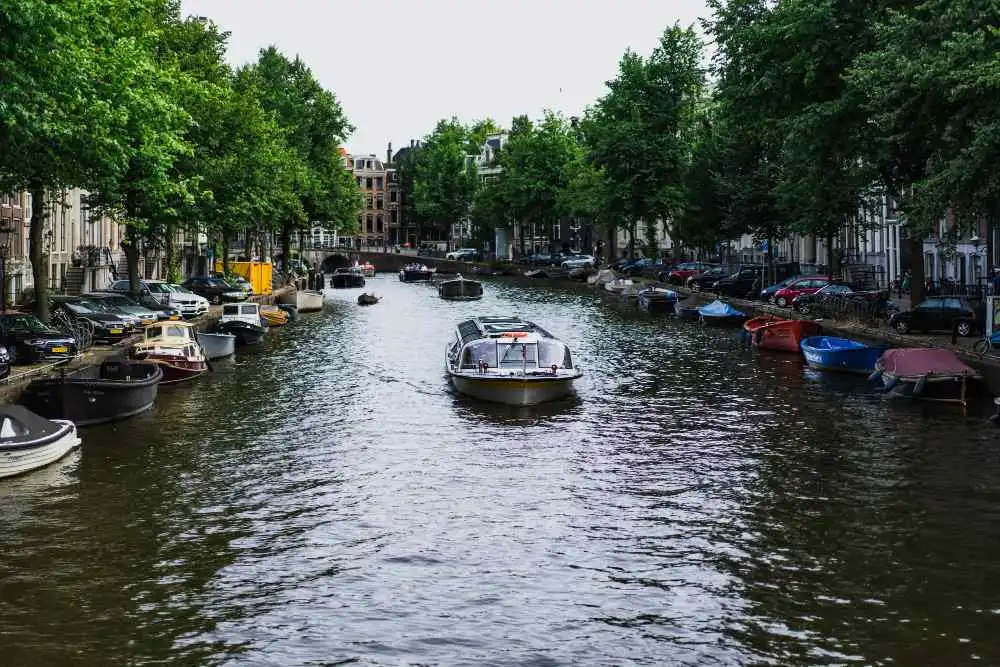
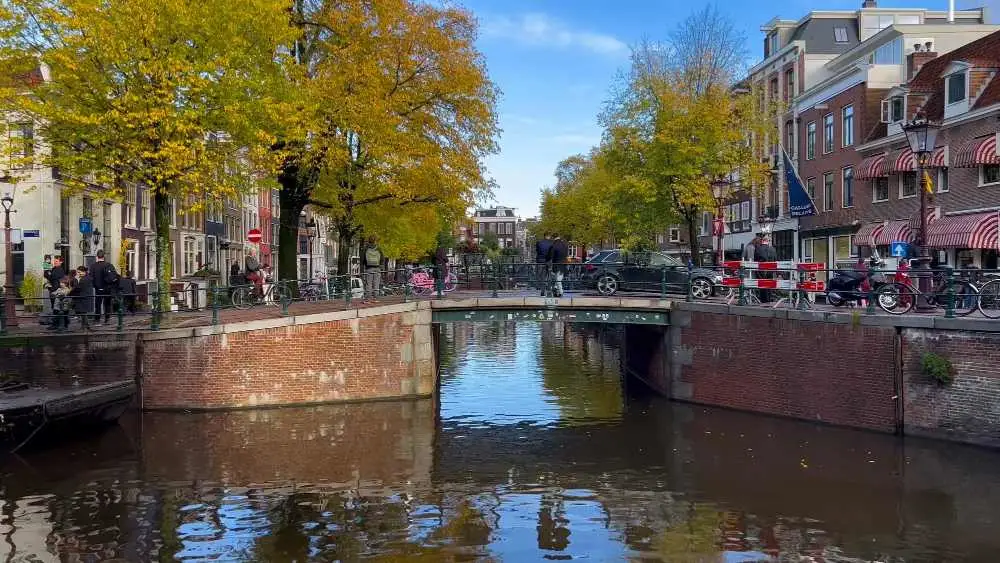
Architecturally, De Pijp is not homogeneous, but rather a hodgepodge of different styles. Streets are broader and more regular than in the historic canal belt, but retain a wealth of character. Brick buildings are in continuous rows that form a polite visual rhythm from which balconies, street trees and broad pavements soften. Such attributes invite lingering: people stop to have a conversation; they linger outside, seated longer in one place; or they move about with no set path. Traffic feels social, not logistical.
The real key, however, is De Pijp’s mix. The neighbourhood feels lived-in and real, created by residents rather than made for tourists. Daily life — shopping, commuting, visiting friends — unfolds side by side with social life in a way that seems organic and unforced. This mix produces a vibrant place without being overwhelming, bustling but not unruly.
As the night thickens, De Pijp continues to throb. But after the energy washes over them, many visitors have started to look around for a place they can put down roots more permanently. Exploration turns into comfort as a second nature. If De Pijp provides the buzz and social warmth, the perfect night is typically found just beyond its most crowded streets — in other corners of the neighbourhood where peace and a sense of familiarity start to set in.
De Pijp is important along the way as well in that regard. It is contrast after silence, energy after reflection and movement before stillness. The neighbourhood doesn’t tell you to slow down, but it gets your system on alert so you know when the time comes.
Weaving the Perfect Evening Route Through Amsterdam
On their own, Westerkerk, Jordaan, Begijnenhof and De Pijp (centroid) are more than simply sights; together they make up something special. They are a rhythm very similar to the perfect Amsterdam night. The sequence unfolds organically, starting with openness and historical presence, spilling onto functioning neighbourhood streets, dropping to quasi-silence and opening back up around things in motion and social activity. No one feels pressured or crushed; each phase readies you for the next.
This is not efficient or even heavily preplanned exploration. It is the result of astuteness — it allows the city to temper its turn according to light, audial and atmospheric shifts. Amsterdam does a great job with these subtle transitions. A broad canal bank leads onto narrow streets and placid courtyards, rejoining bustling lanes as periods of meditation followed by processes of re-engagement. It's the kind of city that doesn't demand to be loved; it simply waits for you to love what you want on your own terms.
And as the afternoon light fades into evening, the experience becomes less about destinations and more about stops along the way. Walking turns into strolling. Observation becomes appreciation. The layers of the city — architectural, social and historical — seem to coalesce rather than pull apart. Crowded streets make way for inviting ones, and the calmness in quieter spaces lingers to shape the rest of the evening.
By the time it’s really night out, my inclination to end walking often comes following and honestly. Nor is it the evidence of weariness or waning interest, but the token of satisfaction. We have seen, heard and felt enough. It’s when the conversations deepen, when impressions are shared rather than amassed, and when the broader story of the city yields to the memory of your own. Rhythm of the day dissolves into stillness, but not cold.
For others, this last act is played out in the vicinity of Overtoom, a street that softly carries central Amsterdam’s bustle into and out of surrounding neighbourhood life. Its placement feels deliberate — close enough to stay in touch, but far enough away that the pace can gradually wind down. Getting here is like finishing a circuit, coming back from a stretch of exploration with the city’s character more sharply defined.

This is how Amsterdam makes one of its biggest strengths visible. It doesn’t divide history from daily life, or movement from stillness. It folds them instead into an evening that feels whole. A visit to Westerkerk, to Jordaan, to Begijnenhof, over the bridge and into De Pijp is not a series of boxes checked off so much as an experience that concludes not with a climax, but an afterglow.
Overtoom: Ending the Evening with Warmth and Comfort
Overtoom has long been seen as a lifeline running through the clogged arteries of this city, but it has never lost its neighbourhood feel. It is a street formed as much by routine as by movement — where people live, meet and relax. After a day ambling through Amsterdam’s historic streets, canals and neighbourhoods, Overtoom seems as good as anywhere to stop the stroll rather than continue it.
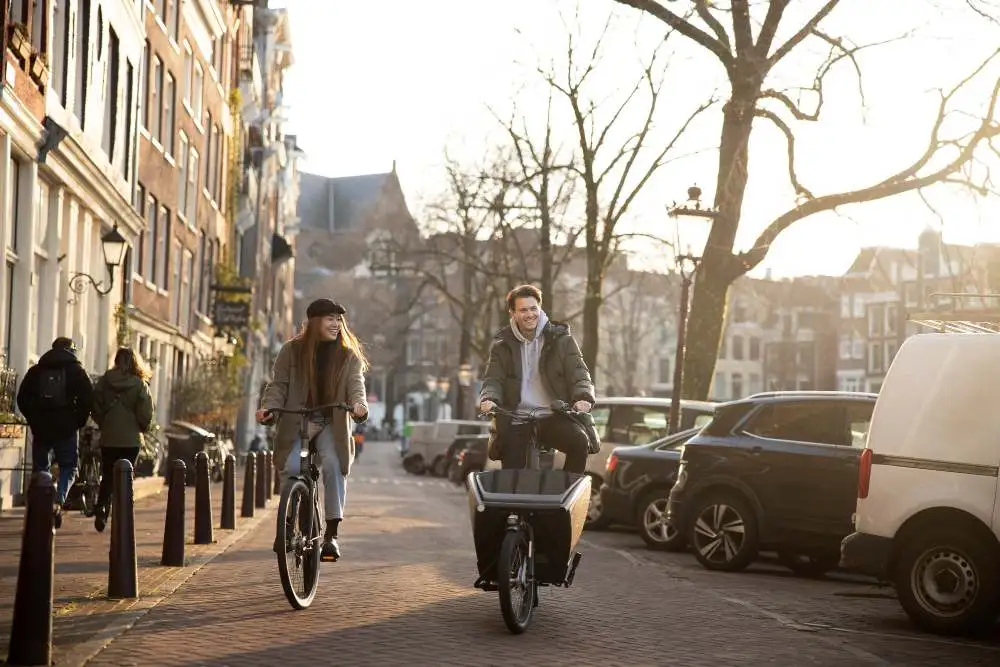
Hours of wanderlust naturally lead to a hushed finality. By the time visitors arrive here, the rhythm has slowed. The vibe along the Overtoom is relaxed and sturdy, with broad sidewalks, creaky tram lines and a healthy mixture of residential life and daily commerce. This is not a street that cries for attention; it will let you sink into it. Sitting down, taking a breath and allowing the day’s summons to settle feels instinctual.
Residing in the heart of Amsterdam at Overtoom 548, Annapurna Kitchen is part of that routine. Instead of the destination of a planned visit, it feels like the place you’ve ended up after a long walk. The atmosphere is conducive to lingering leisurely over conversations, with no sense of rush.
It is the time to patch together a memory of the day—canals mirrored at dusk, secluded courtyards in the gentle rain, the sensuousness of life’s simple daily gestures, the city's changing caleidoscope and neighbourhood mutability. The lens prepares to turn inward, toward shared stories and relaxed pleasure. It is a smooth transition from motion to stillness — all the while warm and homey feeling.
The reason this ending is effective is that it isn’t huge. There’s no jarring transition from sightseeing to dining; nothing feels like it’s shut down for the night. Instead, the city’s energy sort of recedes into the distance. And Overtoom gives you that soft landing — city-central to feel connected, calm enough to drop a shoulder and turn down.
Instead of a destination you’d planned to alight, it becomes where the evening simply ends up. A place where life is meant take its time winding down, to settle off the pace with satisfaction.
Let the Streets Lead You into the Evening
The storied streets of Amsterdam reveal their secrets gradually. They are rewards for patience, curiosity and a spirit of wandering without chase. From the canals around Westerkerk to the lived-in virtues of Jordaan, from the tranquil refuge of Begijnenhof to the pulsing street life of De Pijp, the city opens in layers that deepen as day slides toward evening. Each has its own pace, and together they narrate a story best experienced walking, more instinctually than itinerantly.
An ideal evening out in Amsterdam isn’t about consuming; it’s about restraint. It’s not about how many landmarks you can see or miles you can travel. It’s called doing less, but doing it carefully — walking without a destination in mind, taking note of small things, stopping when one place insists on stillness, letting the mood of the city dictate speed. With daylight fading, shadows splel longer upon the canals, conversations become hushed and a more intimate side of the city is revealed - an insider's peek rarely seen during its more crowded hours.
This slow unravelling provides a space for the mind to think". Images from the day, those naturally recurring, intrude: a peal of church bells; the hush of a courtyard; the nerve-electrifying throb of a neighbourhood street at dusk. It’s a personal experience, built around what you want to do and how you feel rather than a checklist. Amsterdam is very good at that sort of transition, taking visitors from discovery to comfort like a nudge.
When darkness falls, the impulse to bring all walking to a halt comes not from exhaustion but contentment. It’s when you land in a warm, grounded place that feels right — a never-never space where the day can end uninterrupted. That sense of ease comes naturally near Overtoom, and it is here that Annapurna Kitchen provides the ideal finish to your journey. When the day has been one of history and neighbourhood life, there’s nothing more special than sitting down in a serene yet inviting space where the conversation can flow and the energy of this city fades into the distance.
Whether you’re new to Amsterdam — or rediscovering it with fresh eyes — its historic streets can lead the way. Dance to their beat and flow, and let the night take its course—culminating in comfort, warmth, and gentle satisfaction.